AI Writing Tips for Students Who Still Need Their Own Voice
How to use AI for outlining and revision without submitting a draft that sounds disconnected from the student.
AI can help organize notes, suggest counterarguments, and identify gaps. The final voice should still come from the student. If the draft uses phrasing the student would never say, it needs revision.
Writing with integrity means using technology as editing support rather than a copy-paste shortcut, ensuring the intellectual contribution remains yours.
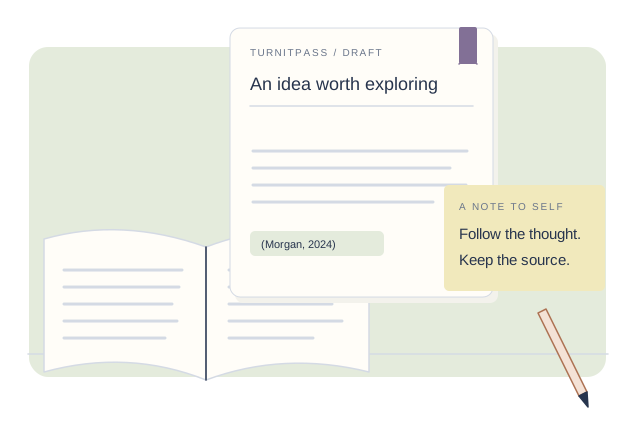
Save outlines, source notes, comments, and intermediate drafts. These materials are useful for learning, and they also help if a detector produces a false positive.
Maintaining a clear paper trail is your best defense, demonstrating that the paper evolved through your own academic efforts.
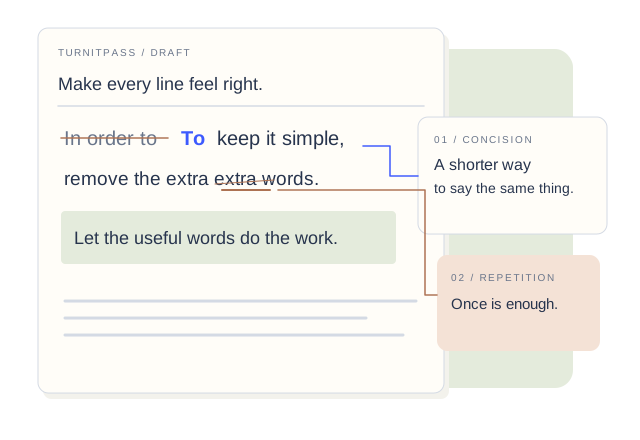
Do not try to fix everything in one pass. First check the argument. Then check evidence. Then humanize rhythm and tone. Finally proofread grammar.
Using TurnitPass helps lock citations in place while refining flow, letting you polish your draft systematically and confidently.
Leitfaden nutzen
Blog-Inhalte sollten nicht bei Ratschlägen aufhören. Nutzen Sie das passende TurnitPass-Tool, prüfen Sie die Ausgabe und halten Sie die letzte Änderung am Originalentwurf fest.
Überprüfen Sie akademische Entwürfe vor der Abgabe auf KI-ähnliche Signale.
ÖffnenErzeugen Sie Zitate in APA, MLA, Chicago, IEEE, Harvard, GB/T und weiteren Stilen.
ÖffnenÜberarbeiten Sie KI-gestützte Prosa und behalten Sie Aussagen, Zitate und die eigene Stimme bei.
ÖffnenHow students can use AI-assisted drafting responsibly while keeping evidence, authorship, and revision history clear.
StudentsPrompt ideas can help with structure, but the final essay still needs source checks, voice, and careful rewriting.
StudentsA practical stack for outlines, source tracking, citation formatting, humanization, and final proofreading.