Seven editing passes writers can use before or after AI Humanizer, from structure to voice to final proofread.
Pass 1: outline the actual argument
AI drafts often sound complete before they are actually specific. Start by writing a one-line outline for each paragraph. If two paragraphs have the same job, merge or cut one of them.
Verifying your core logical structure ensures that your argument develops cleanly and has no redundant elements, laying a strong foundation for your writing.
Pass 2: protect facts and citations
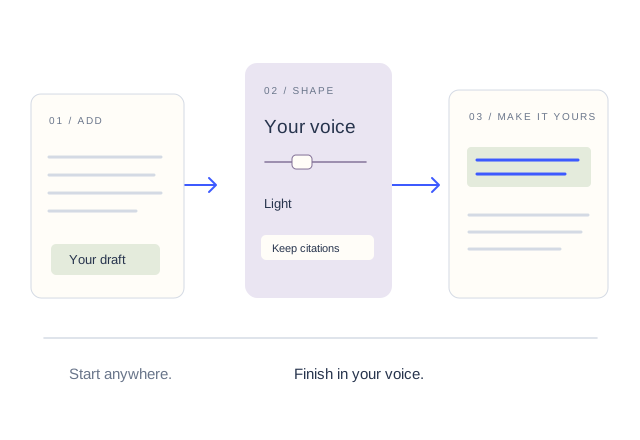
Highlight names, numbers, dates, quoted terms, and citations. Rewriting should not blur evidence. This is especially important for academic essays and client work.
Keep facts locked in place before any styling passes are run.
Pass 3: rewrite transitions
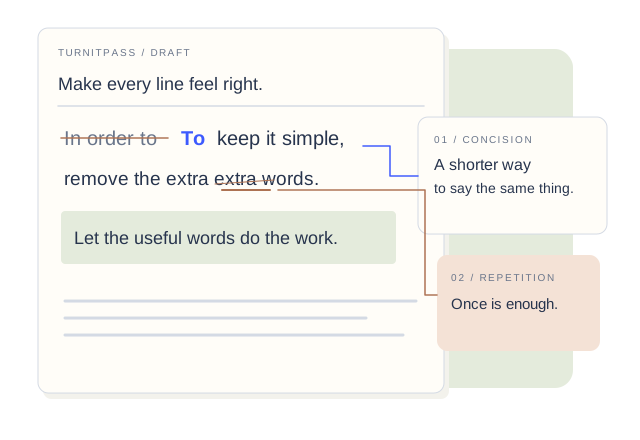
Formulaic transitions are one of the fastest ways for a draft to feel machine-written. Replace generic connectors with transitions that explain the relationship between ideas.
Using organic connector phrases helps guide the reader and establishes a natural cadence, making the writing look human and custom-tailored.
- Instead of "Furthermore," explain what the new point adds.
- Instead of "In conclusion," state what the evidence now shows.
- Instead of "It is important," name why the point matters.
Pass 4: read aloud
Reading aloud catches stiffness quickly. If a sentence sounds like a policy memo but the assignment calls for an essay, revise it. If the sentence is hard to say, it is usually hard to read.
Shorten sentences that run out of breath, and keep a few longer ones for explanation.
Pass 5: vary sentence rhythm
AI drafts often stack sentences of similar length. After the transition pass, split one long sentence, then combine two short ones that belong together.
The goal is readable variety, not randomness. Keep technical terms stable while the surrounding rhythm changes.
Pass 6: restore voice and examples
Generic claims are a common leftover of AI drafting. Replace empty phrasing with an example, a qualification, or a detail only you would add.
If you use AI Humanizer after this pass, choose Natural first. Deep is for drafts that still sound templated after a careful edit.
Pass 7: proofread and compare
Check spelling, grammar, names, dates, and citations last. If you used a TurnitPass writing tool, compare the result with the original and keep the lines that still match your meaning.
Copy or download the result, and save the run to history so you can come back to it.