How Turnitin AI detection scores a draft, and how to revise before you submit.
What the document score is pointing at
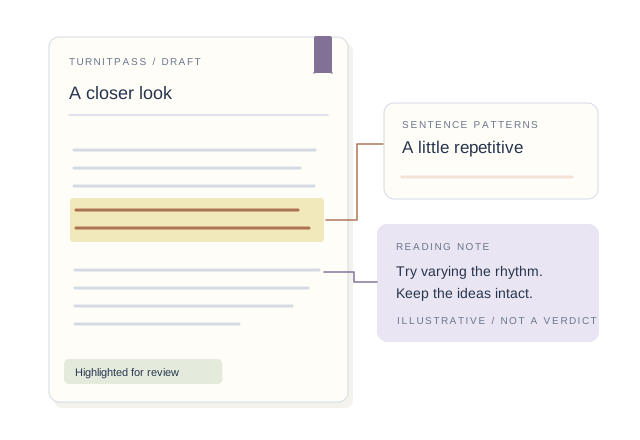
Turnitin AI detection looks at writing patterns across the whole document. Formulaic transitions and even sentence lengths often raise the score.
Rewrite those passages, keep citations intact, and submit a draft that sounds like you.
Revision should improve writing first
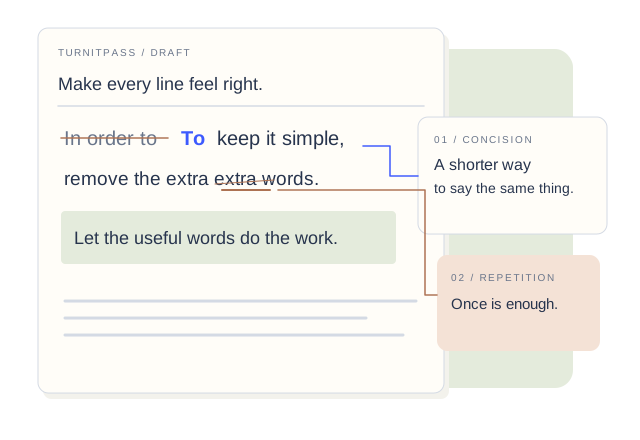
The best way to reduce AI-like signals is to make the draft more specific, more varied, and more clearly connected to the writer's purpose.
Focus on establishing an individual voice, split uniform sentences, and protect citations to keep your research clear.
Use TurnitPass as a preparation workspace
Paste or upload the draft in AI Humanizer, set the language, and choose Turnitin as the target platform. After the rewrite, compare both versions and keep the parts that match your meaning.
Humanize the draft, check AI-writing signals, and keep citations intact before you submit.