Reduza o risco de detecção de IA em uma única passada de reescrita
Mantenha o sentido e as citações, reescreva a cadência e compare o resultado.
O Humanizador de IA da TurnitPass foi feito para essa reescrita, com uma visualização lado a lado de cada mudança.
A anatomia da fraseologia natural
A escrita natural se caracteriza por escolhas humanas sutis: estruturas de frase variadas, fluxo conversacional e alinhamento com o público-alvo. Um texto natural se afasta de padrões sintáticos repetitivos e de descrições genéricas, criando uma leitura agradável. Quando o texto flui suave demais, com cadências previsíveis, os leitores perdem o interesse.
Quando um artigo depende de padrões de frase repetitivos e de conectivos previsíveis, os leitores perdem o interesse rapidamente. O objetivo da humanização é quebrar essas cadências uniformes, devolvendo caráter e clareza ao texto. Ao introduzir variedade estilística e mudanças estruturais, você transforma rascunhos sem graça em artigos envolventes e legíveis.
A TurnitPass reestrutura o ritmo e as transições do Humanizador de IA, mantendo as afirmações centrais, os nomes e as citações intactos.
Além disso, a escrita natural reflete a voz única do autor. Ela incorpora exemplos de primeira mão, observações próprias e decisões estilísticas dinâmicas que o texto escrito por máquina não consegue reproduzir.
Além da troca superficial de sinônimos
Muitas ferramentas básicas de edição tentam disfarçar o texto gerado por IA simplesmente trocando palavras por sinônimos incomuns do dicionário. Essa abordagem superficial é altamente problemática, porque frequentemente introduz erros gramaticais, altera a intenção do autor e deixa o texto desajeitado. Detectores modernos e leitores humanos conseguem identificar facilmente essa paráfrase mecânica.
A humanização de qualidade, em contraste, age em nível estrutural. Ela reestrutura a distribuição do tamanho das frases, reorganiza as transições entre parágrafos e simplifica orações complexas, mantendo os termos técnicos, nomes e citações fixos. Isso garante que a forma seja atualizada enquanto os fatos centrais e os argumentos permanecem totalmente precisos.
Ao evitar o embaralhamento baseado em tesauro, a humanização de qualidade preserva o valor intelectual da sua escrita. O objetivo é um fluxo mais claro, não um monte de sinônimos incomuns.
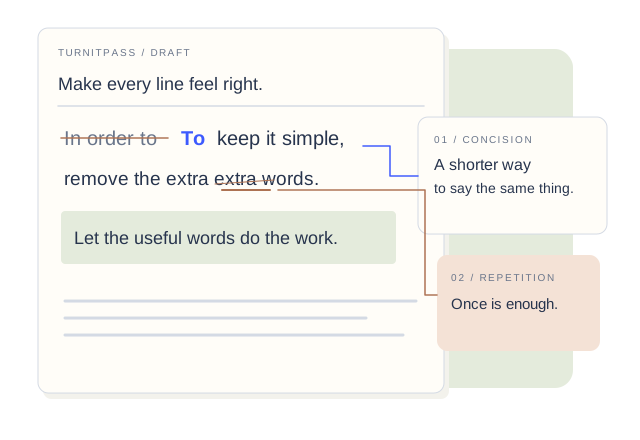
Depois de humanizar, revise as mudanças específicas lado a lado. Os acréscimos e as exclusões destacados facilitam editar uma linha e, em seguida, copiar, baixar ou salvar o resultado.
Uma rubrica para avaliar a qualidade da reescrita
Avaliar a qualidade de uma reescrita exige verificar tanto a legibilidade quanto a integridade estrutural. Uma reescrita de alta qualidade deve soar como se tivesse sido escrita por um especialista da área, com transições naturais e terminologia adequada.
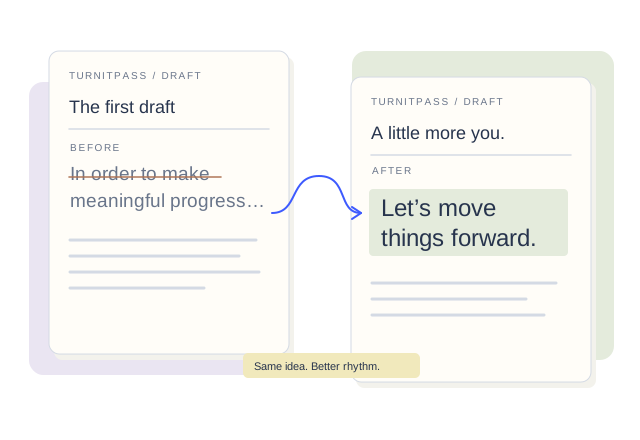
Uma rubrica simples ainda ajuda: variedade de frases, transições lógicas e fatos inalterados. A TurnitPass apoia essa revisão mostrando o original e a reescrita lado a lado.
Faça três perguntas práticas: o texto lê bem, todas as afirmações da pesquisa sobreviveram e a gramática continua limpa? Se uma linha precisar de trabalho, edite-a no próprio lugar.
Usar essa rubrica garante consistência e qualidade em todos os seus projetos de escrita. Ao manter suas revisões em um padrão elevado, você consegue entregar artigos que atendem aos algoritmos de busca, resistem à análise de professores ou clientes e engajam seus leitores.
- Verifique se nomes, citações e afirmações específicas continuam precisos.
- Confirme que o tamanho das frases varia de forma natural entre os parágrafos.
- Confirme que as transições fluem de modo orgânico, sem conectivos repetitivos.
Coloque o Humanizador de IA no seu fluxo de escrita
O Humanizador de IA oferece uma segunda versão sólida para revisar. Escolha Natural ou Profundo, selecione a plataforma para a qual está se preparando, depois inspecione cada mudança e mantenha a voz que ainda soa como você.
Observe como a ferramenta reestrutura a cadência das frases e simplifica estruturas complexas e, depois, aplique os mesmos critérios no próximo rascunho.
Mantendo a precisão factual e estrutural
A precisão factual vem em primeiro lugar. Um rascunho que lê bem, mas traz uma estatística errada ou uma citação quebrada, custa credibilidade.
Trave métricas, citações e referências antes de reescrever. Para rascunhos em inglês, adicione nomes ou termos a preservar. Depois da passada, use a visualização de comparação para confirmar que cada dado e cada autor citado continuam iguais ao original.
Além disso, verifique a integridade estrutural do seu argumento. A reescrita não deve alterar a progressão lógica dos parágrafos nem omitir evidências-chave que sustentam sua tese. Uma edição de qualidade refina o estilo e mantém o argumento intacto.
Estilo e precisão andam juntos. Um fluxo estruturado de revisão na TurnitPass entrega documentos que leem bem e mantêm todos os fatos no lugar.