TurnitPass
PreçosAPIBlog
Iniciar sessãoPainelComeçar grátis
BlogDetection

AI Detector False Positives: What Writers Should Do

Why human writing can get flagged, which patterns raise risk, and how to revise without turning the draft into generic paraphrase.

24/05/202610 min de leitura
86

False positives are a writing-pattern problem

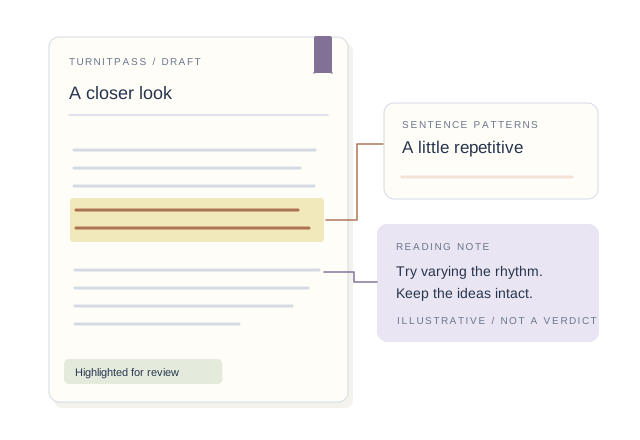
AI detectors do not read intent. They estimate patterns. A human essay can look risky when it uses formulaic transitions, even sentence lengths, neutral phrasing, or repetitive academic structure.

This matters for ESL writers, technical writers, and students who were taught to write in a very polished format. The risk signal is often style, not authorship. Standard connector words and rigid templates often trigger false flags.

Understanding these false-positive triggers allows writers to make conscious adjustments. By introducing stylistic variety and personal arguments, you can write with confidence and lower your risk scores.

Do not only swap words

When a draft gets flagged, simple synonym changes are tempting. They are also the least reliable fix. Detectors and human readers can both notice text that has been mechanically paraphrased.

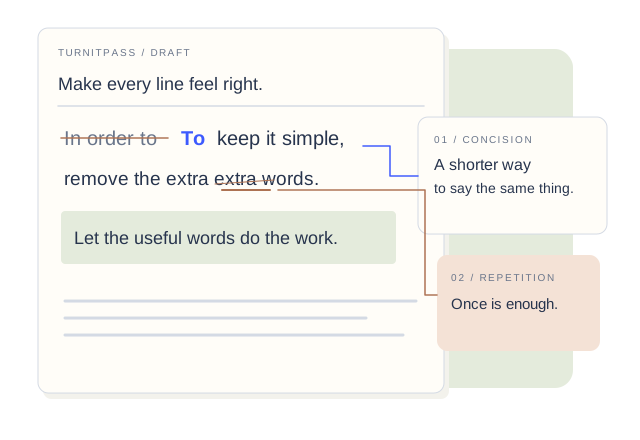
A better revision changes flow. Combine sentences, split long sentences, add specific context, and remove empty transitions. The goal is clearer writing, not a thesaurus pass. Focus on establishing a dynamic cadence.

Keep your research evidence and quotations completely stable. Rewriting should never alter the underlying facts of your essay. Focus your edits on rhythm and style rather than your facts.

  • 1Vary sentence length naturally.
  • 2Replace vague examples with specific context.
  • 3Remove repeated phrases such as "it is important to note."
  • 4Keep evidence and citations intact.

Build an appeal trail

If a school or client challenges a draft, keep evidence of the writing process. Outlines, notes, document history, and earlier drafts are stronger proof than another detector score.

TurnitPass can help writers revise high-risk phrasing before submission, but detector results should still be treated as estimates rather than final judgments. Maintaining your version history provides security.

AI detectorfalse positivesrevision

Use o guia

Transforme o artigo num fluxo de trabalho.

O conteúdo do blogue não deve terminar em conselhos. Use a ferramenta TurnitPass relevante, inspecione a saída e mantenha a edição final vinculada ao rascunho original.

Executar o detetor

Reveja a pontuação, o nível de risco, a origem do texto e as notas dos sinais de escrita.

Abrir

Rever texto marcado

Mude de uma pontuação para a humanização lado a lado quando o rascunho parecer muito uniforme.

Abrir

Verificador de ensaios

Use orientações específicas para ensaios se o rascunho for académico ou voltado para estudantes.

Abrir

Continuar a ler

Todos os artigos
Detection

How AI Detectors Evaluate Sentence Rhythm and Predictability

A plain-English explanation of what AI Detectors look for, and why natural writing is more than random word choice.

Detection

Turnitin AI Detection: What Writers Should Understand

A measured guide to AI Detector feedback, document risk, and responsible revision before submitting academic work.

Detection

AI Detection in 2026: What Writers Should Know

A plain-English view of AI Detector limits, false positives, and revision choices before submitting drafts.

Get started

Transforme versões iniciais de IA em texto natural, reveja sinais de IA e mantenha o fluxo de escrita num só espaço de trabalho.

Começar grátisAPI
TurnitPass

Transforme versões iniciais de IA em texto natural, reveja sinais de IA e mantenha o fluxo de escrita num só espaço de trabalho.

Produtos
  • Humanizador de IA
  • Detetor de IA
  • Verificador de ensaios
  • Detetor para professores
  • API
  • Programadores
  • Painel
Recursos
  • Preços
  • Blog
  • Comparar
  • Atualizações
  • Sobre
  • Contacto
Legal
  • Privacidade
  • Termos

© 2026 TurnitPass. All rights reserved.

All systems normal