A plain-English explanation of what AI Detectors look for, and why natural writing is more than random word choice.
AI Detectors look for uniform rhythm
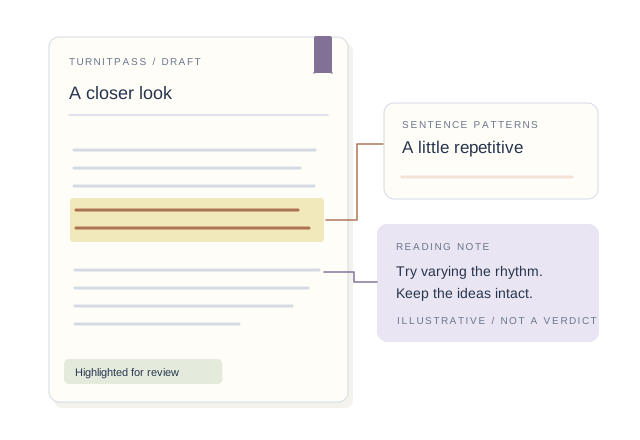
Most detectors look at predictability, repeated structures, transition density, and sentence-length distribution.
TurnitPass AI Detector highlights those passages so you can rewrite them and scan the edited draft.
Predictable does not always mean bad
Some predictability is useful. Academic writing needs structure. The problem is when every paragraph follows the same shape and every sentence lands with the same cadence, creating a robotic tone.
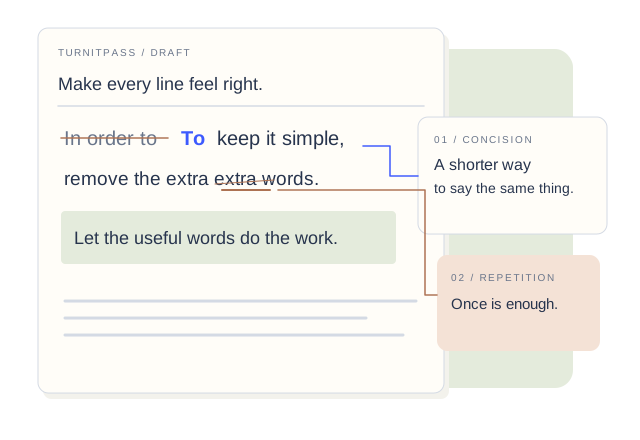
The best revisions keep clarity while introducing genuine writer decisions: a sharper example, a shorter sentence after a complex one, or a more direct claim. This varied flow improves readability.
Use detection as feedback
A detector can point to passages that deserve another look. TurnitPass AI Detector returns an overall signal, pattern notes, and highlighted passages. Continue in AI Humanizer and compare the rewritten lines with the original.
After rewriting, scan the version you plan to submit.