Why human writing can get flagged, which patterns raise risk, and how to revise without turning the draft into generic paraphrase.
False positives are a writing-pattern problem
A human essay can look risky when it uses formulaic transitions, even sentence lengths, neutral phrasing, or repetitive academic structure.
This matters for ESL writers, technical writers, and students who were taught to write in a very polished format. The risk signal is often style, not authorship. Standard connector words and rigid templates often trigger false flags.
Understanding these false-positive triggers allows writers to make conscious adjustments. By introducing stylistic variety and personal arguments, you can write with confidence and lower your risk scores.
Do not only swap words
When a draft gets flagged, simple synonym changes are tempting. They are also the least reliable fix. Detectors and human readers can both notice text that has been mechanically paraphrased.
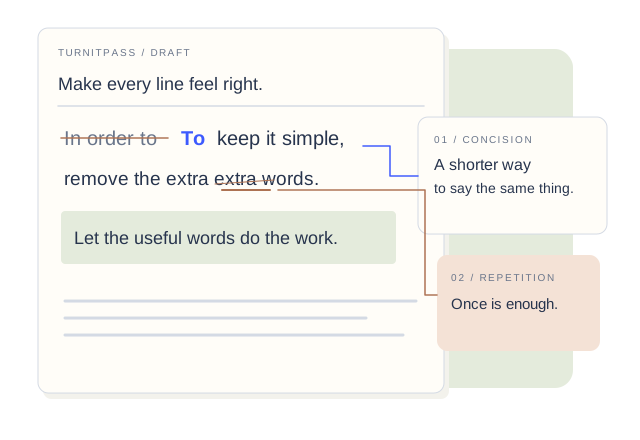
A better revision changes flow. Combine sentences, split long sentences, add specific context, and remove empty transitions. The goal is clearer writing, not a thesaurus pass. Focus on establishing a dynamic cadence.
Keep your research evidence and quotations completely stable. Rewriting should never alter the underlying facts of your essay. Focus your edits on rhythm and style rather than your facts.
- Vary sentence length naturally.
- Replace vague examples with specific context.
- Remove repeated phrases such as "it is important to note."
- Keep evidence and citations intact.
Detect, then humanize
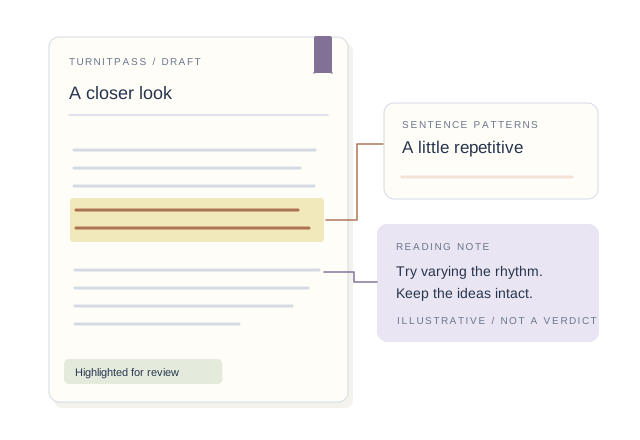
TurnitPass AI Detector highlights the passages that look too regular, then you can continue in AI Humanizer.
Keep outlines and earlier files with the polished version as you work.