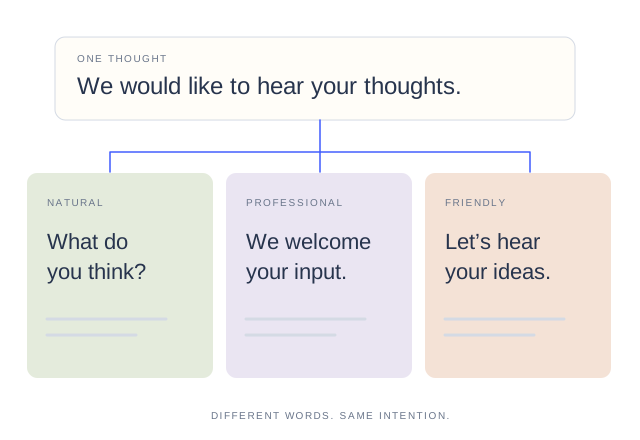
Paraphrasing changes wording. Humanizing changes wording, rhythm, and AI score. Here is when to use each tool.
A paraphraser gives you another version
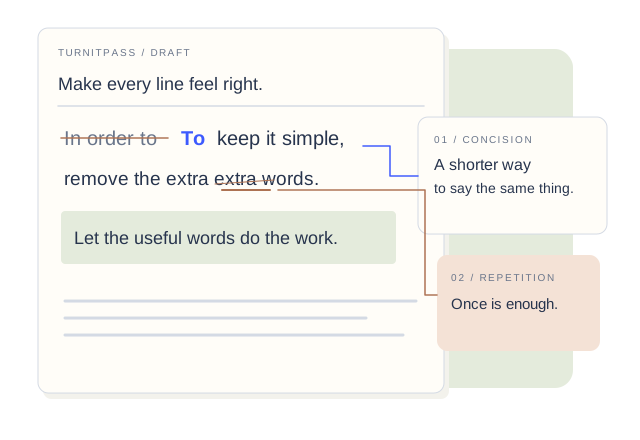
Paraphrase tools are useful when the original sentence is clumsy or repetitive. They generate alternate wording while keeping the same basic structure and meaning, helping you polish sentence flow.
That makes paraphrasing useful for short passages, captions, definitions, and sentence-level polish. For a full AI-generated essay, the deeper rhythm often still needs a humanizer. TurnitPass Paraphrase & Polish gives you Light, Natural, and Deep intensity for that sentence-level work.
AI Humanizer rewrites the pattern
Humanization is broader. It adjusts sentence variety, paragraph order, transition density, and the level of specificity. The output should feel like a writer revised the draft, not like software swapped nouns and verbs.
Use Paraphrase & Polish when wording is the problem, AI Humanizer when the draft still reads like a generic AI answer, and AI Rewriter when you need academic flow. Humanizer offers Natural and Deep, plus a target platform such as Turnitin, GPTZero, or CNKI.
Choose based on risk
If the text already sounds like the writer, use Paraphrase & Polish or AI Rewriter. If the text reads like a generic AI answer, use AI Humanizer and review the side-by-side result.
Keep research details accurate while you improve flow, so the final draft is both readable and ready to submit.
- Use Paraphrase & Polish for sentence-level alternatives.
- Use AI Rewriter when academic flow is the main issue.
- Use AI Humanizer when AI-like patterns are the main issue.