A practical way to use ZeroGPT-style feedback and revise the flagged text.
Fix ZeroGPT flags without mechanical paraphrasing
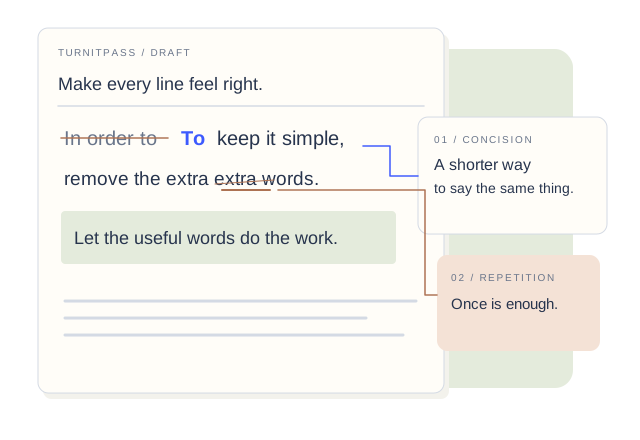
Mechanical paraphrasing often leaves the same AI-like rhythm in place. Rewrite cadence, then scan the result.
TurnitPass Paraphrase & Polish handles sentence-level wording. Switch to AI Humanizer when the whole passage still feels templated.
How ZeroGPT Estimates AI Score
Feedback from ZeroGPT often flags repetitive structure, predictable transitions, and even sentence length. Human writers mix short remarks with longer, detailed clauses, so revision should focus on rhythm and specificity. The study of ZeroGPT-style checks shows that overly predictable flow is a common trigger.
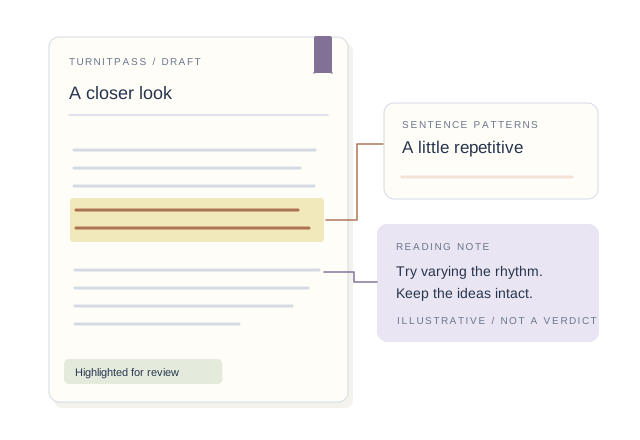
When every sentence has a similar shape and every paragraph closes the same way, ZeroGPT often highlights those passages as too regular.
Add real variety: shorter lines after long ones, specific examples, and transitions that explain your logic. That lowers AI-like signals and makes the writing clearer.
Style Indicators and False-Positive Risk Factors
False positives remain one of the hardest parts of detection. Because these systems rely on pattern recognition, highly structured or formal writing can be flagged even when a person wrote every word. Academic essays and technical documentation are the usual examples.
When you write in a style that minimizes personal voice or varied rhythm, detectors like ZeroGPT often raise the score. Sentences that start with connectors such as "furthermore," "in addition," or "it is important to note" read as predictable.
The practical response is authentic variety: personal insights, direct examples, and mixed sentence length. You can keep academic or professional standards without writing in a rigid template.
Specialized technical terms or mathematical claims can also look predictable. Leave those terms intact and vary the surrounding explanation so the draft still reads like your work.
Practical Revision Techniques for High-Risk Drafts
Thesaurus scrambling rarely works when the underlying sentence structures still feel uniform. Start by rewriting transitions and varying sentence lengths.
Use a layered pass: replace generic connectors with context-specific transitions, then break up long multi-clause blocks. Explain the relationship between points instead of stacking the same linking phrase.
Specific examples and data also differentiate writing. Generic tools cannot invent your field notes, assignment details, or client facts.
Keep factual references, citations, and quotations unchanged.
- Vary sentence cadence by mixing short statements with longer explanatory sentences.
- Remove generic, repetitive transition words and explain how your ideas connect.
- Keep factual claims, numbers, names, dates, and bibliographic citations unchanged.
From a detector score to a cleaner draft
TurnitPass AI Detector scans pasted or uploaded text and returns an overall signal, pattern notes, and highlighted passages.
Continue in AI Humanizer to rewrite the flagged lines, then compare the result side by side with the original. Prepare for ZeroGPT by choosing that platform in AI Humanizer after the scan.
Scan the edited version, then copy or download the result.
A readable draft with a lower AI score is the version you want to submit.
Best Practices for Maintaining Professional Prose
As you edit to lower AI-like signals, keep the prose clear.
Focus on the reader: logical arguments, presented evidence, and natural transitions. That kind of communication is what people actually want to read.
Scan first, humanize the flagged passages, then check the revised draft. Detection and rewriting live in the same product, so you can move from a high-risk line to a cleaner version without switching sites.
Editing for clarity and variety is ordinary professional work. Scan, rewrite the flagged lines, then check the revised draft.