A practical editing framework for turning stiff AI drafts into natural writing while keeping claims, citations, and structure intact.
Start with meaning, not synonyms
The weakest AI humanization workflows start by replacing words. That creates awkward phrasing, and it often changes the author intent. A stronger workflow starts by identifying the claim, evidence, and transition in each paragraph. By understanding the core argument first, you can preserve the underlying meaning while improving the formatting.
Before rewriting, mark the sentences that carry facts, names, dates, citations, or numerical claims. Keep those details stable while you change the rhythm around them.
Ultimately, editing AI text is an exercise in structural alignment. If the original draft makes a valid point, your job is to deliver that point in a clear, authoritative voice. By prioritizing intent over vocabulary shifts, you maintain the academic and professional credibility of the text.
- Keep names, citations, and figures stable.
- Rewrite sentence rhythm before changing vocabulary.
- Check the final draft against the original claim by claim.
Break the uniform rhythm
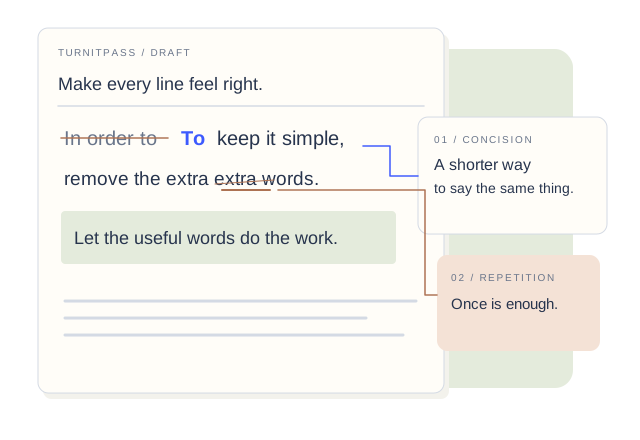
AI drafts often feel smooth in the wrong way. Sentences have similar length, paragraphs close with predictable transitions, and every idea arrives in the same order. Human writing usually has more unevenness, mixing short observations with long, detailed statements to create an engaging cadence.
TurnitPass focuses on that rhythm. A natural draft mixes short and long sentences, moves some context earlier, and avoids stacking the same connector phrases across a whole essay. Breaking that uniform pattern helps the draft read like expert writing rather than a generic AI answer.
To fix rhythm issues, read your draft aloud. If every sentence sounds like a policy memo or lands with the exact same cadence, split long clauses and rewrite transitions. Establishing a dynamic flow makes your content more readable and engaging.
Add writer-level choices
A humanized draft should not become casual by default. Academic writing can still be human. The difference is that a real writer makes choices: what to emphasize, what to qualify, and where to slow down. AI models write with clinical neutrality, which can make their arguments feel detached.
Use examples that match the assignment or audience. Replace generic claims with concrete framing. When the source text says "technology has many benefits," the rewrite should explain which technology, which benefit, and for whom. Adding specific details demonstrates expertise and authority.
Injecting proprietary metrics, personal thesis statements, and localized context is the best way to separate your work from boilerplate AI text.
Humanize, then compare
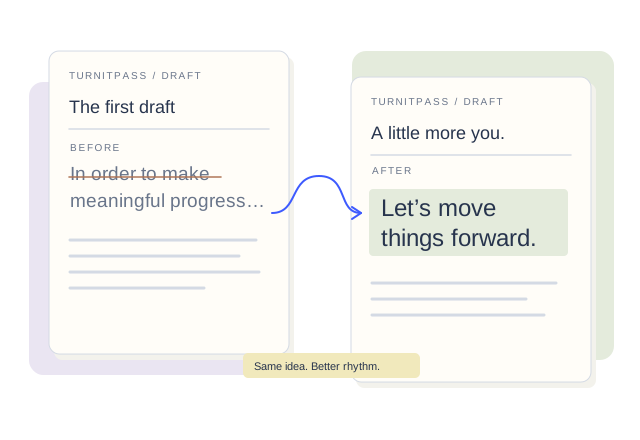
AI Humanizer is most useful when it gives the writer a strong second version to review. Read both versions side by side and keep the lines that sound accurate.
Paste your draft, choose Natural or Deep, and pick the platform you are preparing for—Turnitin, GPTZero, ZeroGPT, CNKI, and more. After the rewrite, TurnitPass highlights what changed so you can inspect, edit, copy, or download the result.
Check names, citations, numbers, and technical terms against the original. For English drafts, add the terms you want to keep unchanged.